
Quick answer
To find the moon phase on a date, pick the date and the tool shows the moon as it looked at 9 pm in your time zone: the phase name (such as Waxing Gibbous or Full Moon), how much of the disc was lit, the day of the week and the nearest full and new moons. It works for any date from 1900 to 2200, so you can look up the night you met, your wedding, a birthday or a date still to come.
How to see the moon on your special day
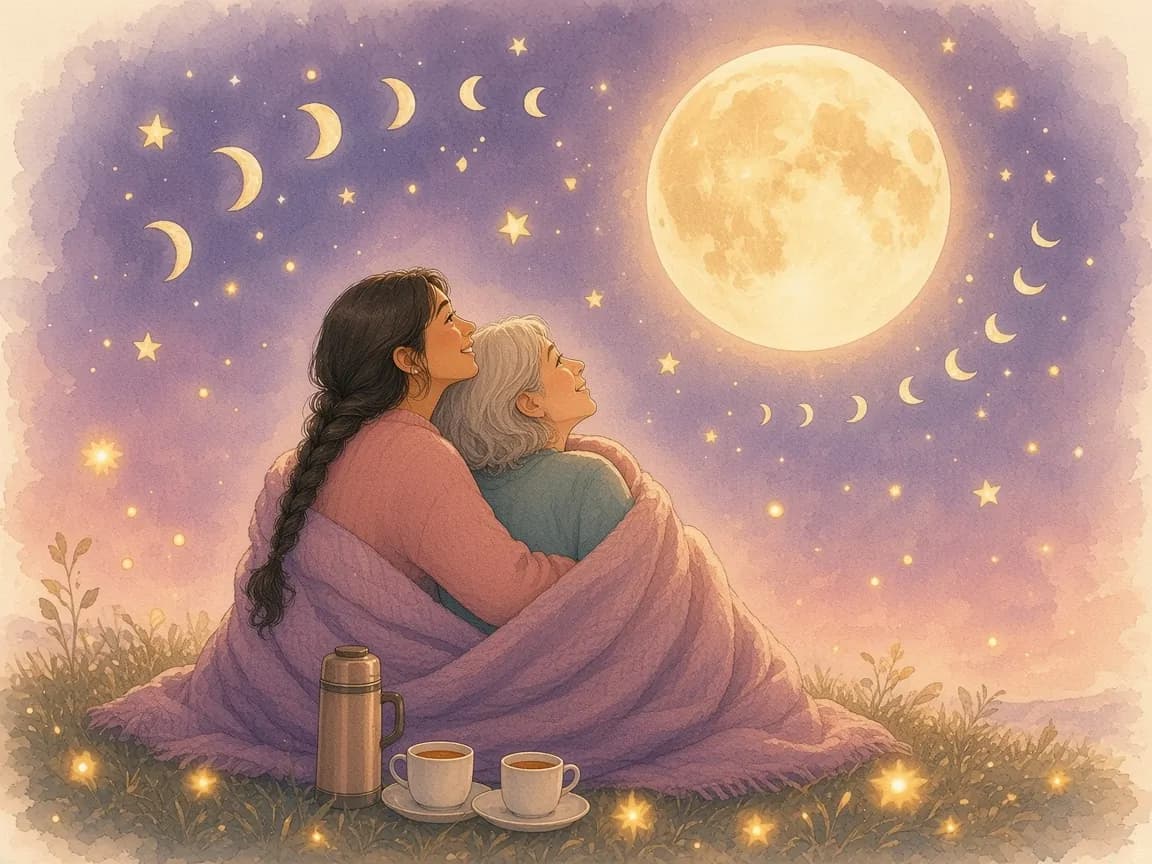
The moon changes slowly, by about 12 degrees a day, so the exact time rarely matters. We use 9 pm local time because that is when most special evenings happen. A full moon is shown for roughly a day either side of the exact moment, just as calendars do.
- Pick your date: the night you met, a first date, an engagement, a wedding or a birthday.
- Choose what happened that day, so the result and share card use the right words.
- If you live south of the equator, switch on the southern hemisphere view. The moon looks mirrored there.
- Read your result: the phase, the percentage lit, the weekday and the nearest full moon.
- Save the image or copy the link to send it to your partner.
The eight moon phases, explained
The moon does not make its own light. We see the half lit by the sun, and how much of that half faces us changes as the moon goes round the Earth. One full cycle, from new moon to new moon, takes about 29.5 days. That is called a synodic month.
| Phase | How much is lit | When you would see it |
|---|---|---|
| New Moon | Almost none | Not visible: it is up during the day, near the sun |
| Waxing Crescent | A thin sliver, growing | Low in the west after sunset |
| First Quarter | Half, on the right | High in the sky at sunset, sets around midnight |
| Waxing Gibbous | More than half, growing | Most of the evening and well into the night |
| Full Moon | The whole face | Rises at sunset, up all night |
| Waning Gibbous | More than half, shrinking | Rises after dark, still up in the morning |
| Last Quarter | Half, on the left | Rises around midnight, up at breakfast |
| Waning Crescent | A thin sliver, shrinking | Low in the east before dawn |
Left and right are for the northern hemisphere. In Australia, New Zealand, South Africa or South America, swap them, which is what the southern view toggle does.
How the moon phase is calculated
The tool runs a standard astronomical method from Jean Meeus's Astronomical Algorithms, the reference book used by astronomers and planetarium software. It works out the angle between the sun and the moon as seen from Earth, adds the biggest corrections for the moon's tilted, slightly oval orbit, and turns that angle into a phase and a lit percentage.
We tested it against published full and new moons, including the total solar eclipse of 8 April 2024, which happened at new moon. The phase is accurate to within a few hours and the brightness to about one percentage point, which is more than enough for a keepsake.
Everything runs in your browser. The date never leaves your device, and the page works even if your connection drops after it loads.
Make it a keepsake
The moon on the night you met is the kind of detail that turns into a lovely gift. It is personal, it costs nothing to find out, and it is true. Here are a few ways couples use it.
A handmade moon card
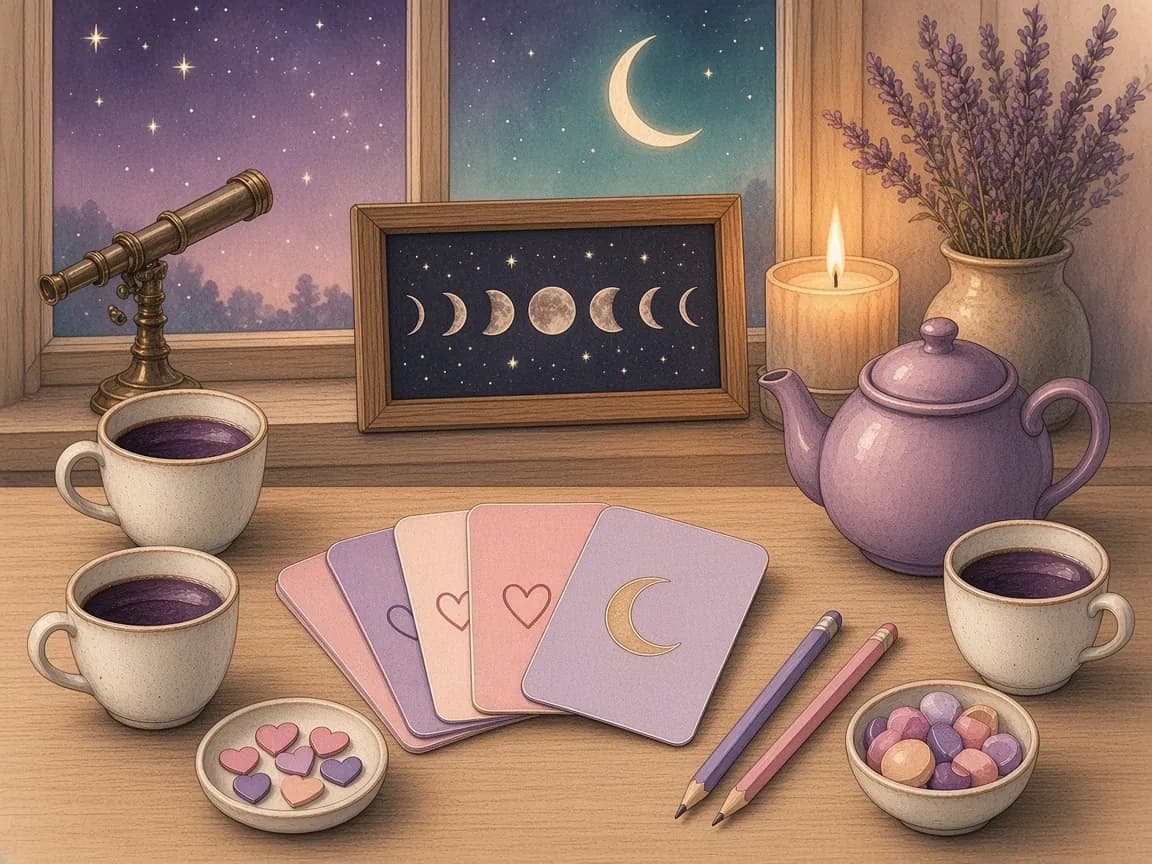
Draw the phase on the front of a card and write the date and what happened inside. Copy the shape from your result.
A moon timeline
Look up the moon on your first date, first trip and anniversary, and line them up in a frame or a photo book.
A full moon date
Check the next full moon and plan a walk, a picnic or a call outside to watch it together, even from two cities.
An anniversary surprise
Pair the result with the anniversary calculator to see how many moons you have shared: about 12.4 a year.
The same moon, from two places
Long-distance couples often say the moon is the one thing they can look at together. It is true: wherever you both are, you see the same phase on the same night, even if one of you sees it hours later. A full moon is a lovely excuse for a call while you both stand outside.
If you are in different hemispheres, one of you will see it mirrored, lit from the opposite side. Send each other a photo and compare. Our guide to long-distance anniversary ideas has more ways to mark a date when you cannot be together, and the days together calculator counts every day since the moon you started with.
Q & A
Frequently asked questions
What was the moon on the day I was born?
Pick your birth date and the tool shows the phase that evening, how much of the moon was lit and the day of the week. It works for any date from 1900 to 2200.
How accurate is this moon phase calculator?
It uses a standard method from Jean Meeus's Astronomical Algorithms. The phase is right to within a few hours and the lit percentage to about one percentage point.
Why is the moon mirrored in the southern hemisphere?
People south of the equator see the moon upside down compared with the north, so the lit side appears on the opposite side. Switch on the southern view to see it as you would.
Does the time of day change the moon phase?
Only slightly. The moon moves about 12 degrees a day, so a few hours rarely changes the phase name. We show it at 9 pm in your time zone.
How long is a moon cycle?
About 29.5 days from one new moon to the next. That means there are 12 or 13 full moons in a year.
Can I see the moon phase for a future date?
Yes. Pick any date up to 2200 to plan a full moon date or see the moon on an upcoming anniversary.
Do you save the dates or names I enter?
No. The calculation runs in your browser and nothing you type is sent to or stored on Lovelle's servers. Your inputs are kept in the page address after the # sign, which browsers do not send to websites, so a share link opens with the same result. Anyone with the link can see those inputs, so share it only with people you trust.
Keep reading



Calculated in your browser for 9 pm in your time zone, using standard astronomical formulas. Accurate to within a few hours for the phase and about 1% for brightness. Last updated 24 October 2026.